Butter, Chai, and the Clock That Refuses to Hurry: Mumbai’s Irani Cafes
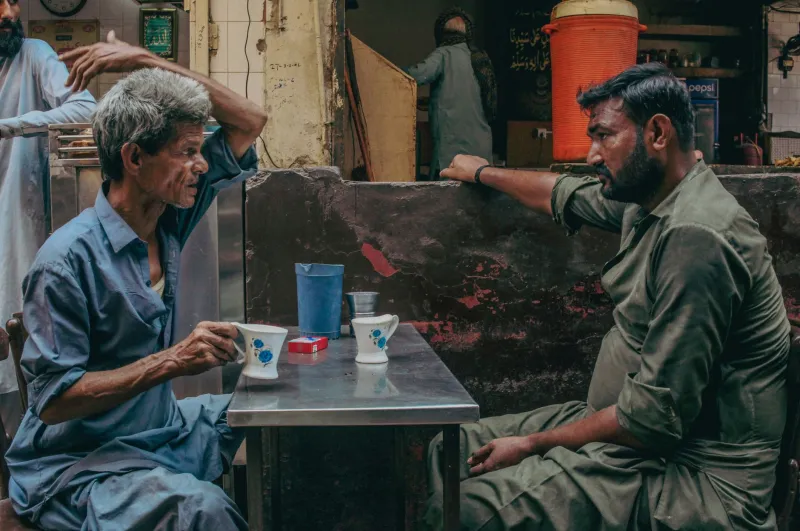
Some cities announce themselves with skyscrapers. Mumbai announces itself with a ceiling fan, a marble table, and a cup of chai that tastes like it has been simmering since breakfast. The Irani cafe is one of the city’s great everyday institutions—not a museum piece, not a themed restaurant, just a room where people eat, argue quietly, read the paper, and get on with the day.
If you are visiting from the US and want a Mumbai morning that feels less like a checklist and more like a neighborhood, this is where to start. Go early. Order simply. Stay long enough to notice the room.
What Counts as an Irani Cafe
These are not cafes in the laptop-and-cold-brew sense. The name refers to Zoroastrian immigrants from Iran who settled in Bombay in the late 19th and early 20th centuries and opened inexpensive tea houses near docks, mills, offices, and train stations. The format spread because it worked: strong milky tea, bread and butter, eggs, biscuits, and a seat that did not cost much.
You can still spot the old ones by their signs, their high ceilings, their mirrored walls, their bentwood chairs, and their glass cabinets filled with baked goods. Some have air conditioning now. Many rely on fans. Almost all have a clock that seems to be running on its own schedule.
The menu is usually short. That is the point. You are not there for a tasting menu. You are there for bun maska—a soft, split bun brushed with generous butter—and chai. Anything else is a bonus.
How to Order Without Overthinking It
Start with the basics. Ask for “ek chai, ek bun maska” and you will be understood. The chai is usually sweet, milky, and strong; if you want a smaller pour, ask for a cutting. If you want to sound like you have done this before, ask what is fresh from the oven and point.
Useful additions, depending on the cafe: khari biscuits, mawa cake, brun maska (a crisper bun), and akuri—Parsi-style spiced scrambled eggs—on toast. Some places do a proper breakfast plate; others are strictly tea-and-bread. Both are valid. Do not overorder. The pleasure is in the repetition, not the volume.
Carry small cash. Many of these places are old-fashioned in the best and most practical sense, and card machines are not always part of the furniture.
The Etiquette Is Simple. The Room Is Not.
Share a table if that is what the room requires. Keep your voice low. Do not turn the place into a co-working space or a photo studio. If you want to take pictures of the room, ask first; if people are in the frame, ask them too. A quick “may I?” goes a long way.
At some cafes, you order at the counter and pay at the end. At others, someone will come to you. Watch what the regulars do. Tip by rounding up. Do not expect Wi-Fi, a gluten-free menu, or a server who checks on you every five minutes. This is not neglect. It is a different rhythm.
And do not treat the place like a nostalgia exhibit. The people around you are not extras in your Mumbai story. They are having breakfast.
Three Rooms for a First Morning
Kyani & Co., Marine Lines. A classic starting point near Marine Lines station and not far from Oval Maidan. Go on a weekday before 10:30 a.m. if you can. Order bun maska, chai, and akuri if you are hungry. The room is busy, the service is brisk, and the whole thing feels like a Mumbai morning in miniature.
Yazdani Bakery, Fort. Come for the bakery energy as much as the cafe. The brun maska and mawa cake are the move, and earlier is better because stock does not wait for you. It is a short walk from the Fort office district, so you can pair it with a wander past the old buildings and book stalls.
B. Merwan & Co., Grant Road. Old-school, unfussy, and close enough to the station that it fits neatly into a train-heavy day. It is the kind of place where you sit, eat, pay, and leave feeling like you have been let in on something ordinary and excellent.
Hours can be old-fashioned and change without much notice. Check before you cross town.
Why They Matter—and Why to Go Now
Irani cafes are not disappearing because nobody loves them. They are disappearing because the economics are brutal: rising rents, inheritance disputes, changing eating habits, and a city that keeps rebuilding itself around new appetites. Every closure takes away a particular kind of room—one where you can sit for twenty minutes without spending fifteen dollars, where the tea is hot, and where nobody is trying to upsell you.
That is why the useful thing is not to mourn them from afar. Go. Buy breakfast. Bring cash. Be polite. Tell a friend. The point is not to freeze the city in amber. The point is to keep a few good rooms in use.
Practical Notes for US Travelers
Mornings are best. Weekdays are calmer than weekends. Dress casually. Carry tissues and hand sanitizer. Ask before photographing people. If a place is full, wait outside rather than hovering over a table. And if you only have time for one stop, make it a simple one: chai, bun maska, and ten minutes of watching Mumbai wake up.