Follow Your Nose Through Bhuleshwar: A Rush-Hour Walk in Six Scents
There's a stretch of old Mumbai where you can close your eyes and still know exactly where you're standing. Six o'clock is when it gets loudest and, not by coincidence, when it smells the strongest. In Bhuleshwar and Kalbadevi — the dense, gorgeous, slightly overwhelming wholesale heart of the city, a ten-minute walk inland from Charni Road station — the evening works like a cue sheet for your nose. Burnt incense means temple. Sweet, oily smoke means somebody is frying. Wet stone underfoot means you've drifted into a courtyard that hasn't fully dried since the last rain.
Most visitors navigate this quarter with a phone in hand, which is a shame, because the nose does the job better. Landmarks here are stacked so tightly — a centuries-old temple, a bangle market, a gold bazaar, a produce market — that a map turns into spaghetti. Smell moves in layers instead, and each layer is a separate street.
Why scent is the most honest guide in this city
Guidebooks sell Mumbai as a skyline and a seaside promenade. That's the postcard. The working city — the one where people buy vegetables, haggle over silver, and get their ears pierced on a Tuesday afternoon — announces itself by smell long before you see anything worth photographing. Scent is democratic that way. It doesn't care whether you booked a heritage walk or just got off the train at the wrong exit.
It's also a memory machine. Ask anyone who grew up here what Mumbai smells like at dusk and you'll get a specific answer: jasmine and diesel, or fried chili and sandalwood, or the particular rubber-and-rain smell of a wet staircase. Follow that thread for ninety minutes and you'll come out the other side understanding the neighborhood in a way no audio guide manages.
The route at a glance
Start at the Bhuleshwar Temple end of Kalbadevi Road around 5:45 p.m., work south and east through the flower and bangle lanes, cut across to the produce stalls, and finish with chai somewhere loud. Total distance is maybe a mile and a half, but budget two hours — you'll stop constantly. Go on a weekday if you can; Saturday evening is a contact sport.
One: incense and marigolds, Bhuleshwar Temple
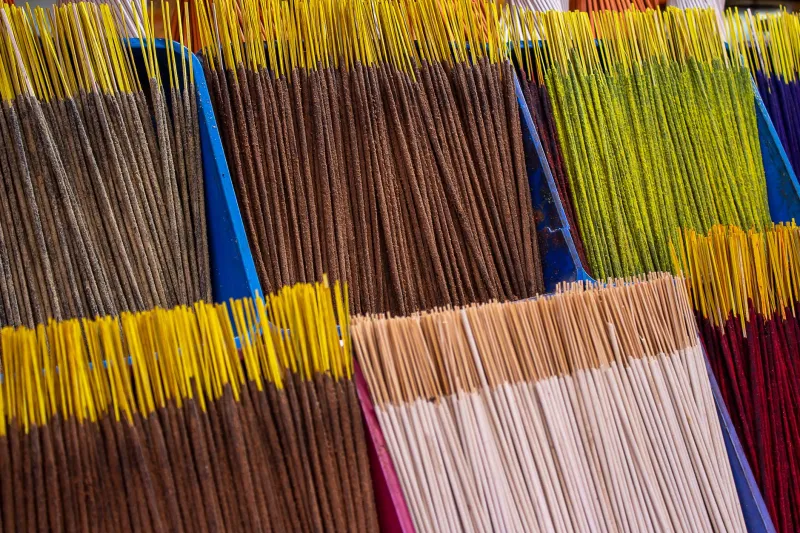
Stand outside the temple steps and breathe. Sandalwood, camphor, ghee lamps, and the green-sharp smell of crushed marigold all arrive at once. Vendors selling garlands sit within arm's reach of the entrance, so the floral and the sacred blend into one note. This is the anchor scent of the whole walk — the thing you'll smell again three streets away and use to orient yourself.
Two: the flower lanes
The lanes running off the temple are stacked with jasmine, tuberose, and roses sold by weight, often for someone's hair or someone's altar. Tuberose is the one that ambushes you: sweet, a little soapy, stronger at dusk than at noon. If you've ever wondered why Mumbai hotel lobbies smell the way they do, this is the source material.
Three: whatever's frying
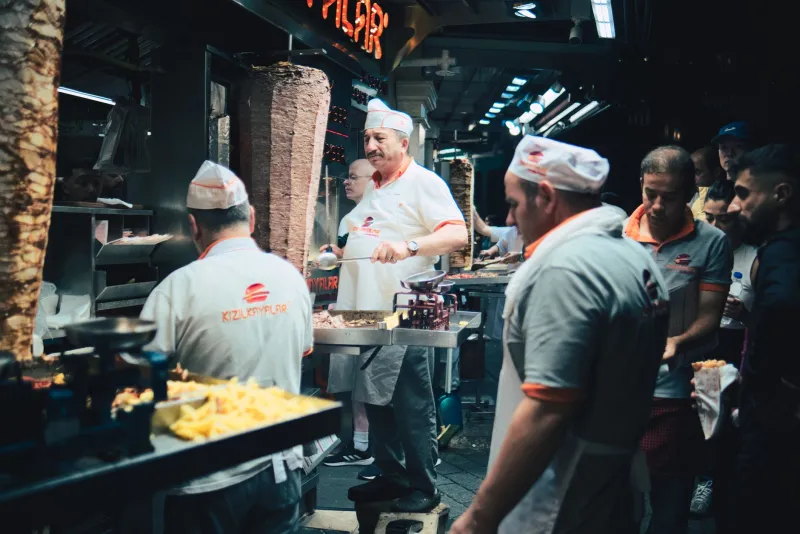
Follow the oil. Around the Kalbadevi Road crossings you'll hit vendors turning out bhajiyas, samosas, and kanda bhaji — gram flour, onion, chili, hot oil — in a rhythm that picks up right as offices empty. The rule for visitors is simple: eat where the queue is moving, eat it hot, and skip anything that's been sitting under a lamp. Ask for a paper plate, add the green chutney, and keep walking.
Four: cut fruit, with salt
Carts appear late afternoon selling watermelon, pineapple, guava, and cucumber, sliced to order and dusted with chaat masala and lime. It's the cleanest-tasting thing you'll eat all evening and the cheapest. A word of caution for out-of-towners: peel-and-cut fruit from a busy cart is generally fine, but ice in drinks and uncut salads are where stomachs go sideways. Stick to what's being sliced in front of you.
Five: diesel, and the machinery of the market
Kalbadevi Road at rush hour is trucks, handcarts, scooters, and delivery bikes in a negotiation that never quite resolves. The diesel smell is part of the geography — sharp, hot, and unmistakable after the sweetness of the flowers. Don't fight it. Step into a doorway, let a handcart pass, and notice how quickly the air changes block to block. This is the least romantic scent on the list and the most honest one.
Six: damp stone, if you're lucky
Mumbai's monsoon runs roughly June through September, and in those months the whole walk rewrites itself: wet basalt, mossy courtyard walls, the earthy smell of a building that has been rained on for weeks. Visit in November, as the city is now, and you get the drier version — cooler evenings, dust settling, stone still holding a little of the last rain in the shade. Same route, different album.
Practical notes
- Footwear: something closed and grippy. These lanes are uneven, and after rain they're slick.
- What not to wear: cologne or perfume. You're here to smell the street, not compete with it.
- Money: small cash helps at carts, though QR payments are everywhere now.
- Crowds: single file, keep moving, and don't photograph people's faces in the market without asking. Most will say yes if you ask.
- Timing: 5:30 to 7 p.m. is the sweet spot — the frying has started, the flowers are fresh, the light is going gold.
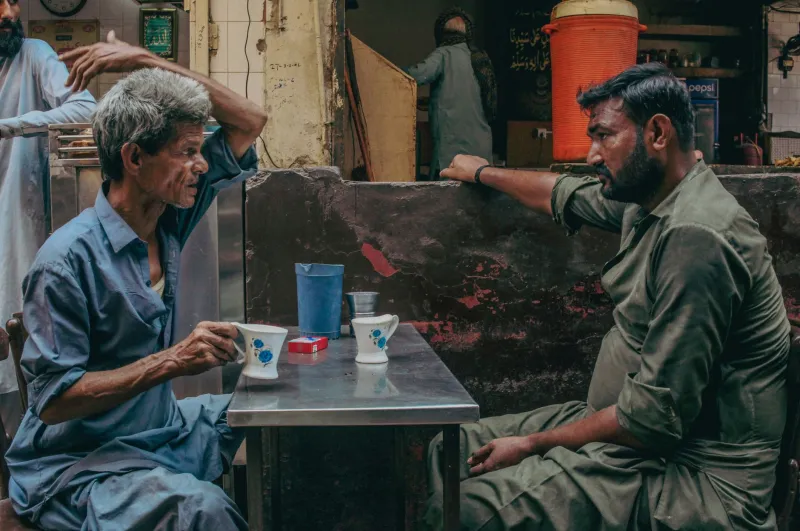
Finish at any chai stall with a plastic chair and a crowd around it. Order a cutting — half a glass — and sit for ten minutes. You've just walked a neighborhood by nose, which is how most of the people around you learned it in the first place.