Hold That Smile: Booking a Portrait in Mumbai’s Analog Photo Studios

Photo by Photo by Suraj Tomer on Unsplash on Unsplash
The bell above the door at Meher Photographic Studio sounds like a school bell from another decade. Inside, a ceiling fan turns with a faint tick, and the air smells of dust, lens cleaner, and the warm plastic of old flash units. A man in a checked shirt is adjusting a wooden view camera. His name is Farrokh, and he has been taking portraits in this room near Flora Fountain since 1978. He does not look up when I enter. He says, without turning: “Sit. Comb your hair. We will be ready in five minutes.”
That is the whole pitch, really. In a city where everyone carries a camera in their pocket, a handful of analog studios still ask you to sit still, arrange your face, and wait. The wait is the point.
The Room That Smells Like Flashbulbs
Meher Photographic Studio is the kind of place that feels preserved rather than restored. The walls are lined with sample portraits: Parsi families in matching white, a bride with a garland so heavy she seems to be listing slightly, a boy in a blazer holding a cricket bat. The backdrops are hand-painted canvas—one is a soft blue sky, another a formal drawing room that never existed. Farrokh’s father opened the studio in 1962. The darkroom is still behind a black curtain, though it sees less action now.
“People come for passport photos,” Farrokh says. “That is the bread. But the portraits—the portraits are the butter.” He pulls out a stack of 8x10 prints. They are from 2026, but they could be from any year in the last four decades. A family of four sits on a bench, hands folded. The father looks serious. The mother looks patient. The children look like they have been told to look patient. It is not a candid. It is a document.
A young couple arrives with a toddler. They want a portrait for the child’s first birthday. Farrokh spends ten minutes positioning a small wooden stool and a stuffed rabbit that has lost one eye. The toddler screams. Farrokh waits. He has the calm of a man who has negotiated with thousands of toddlers. Eventually the child sits, stunned by the flash. Click. “Come back Thursday,” he says. “Bring the child’s grandmother. We will do a full family.”
The Waiting Room Is the Real Archive
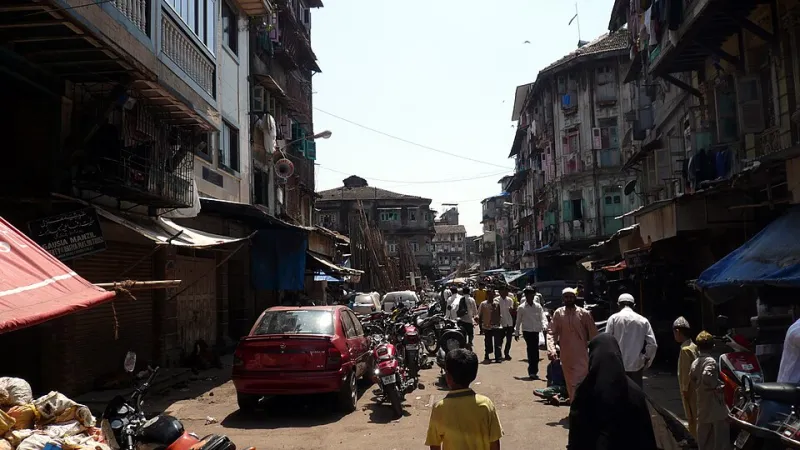
Across town in Dadar, Shreeji Photo Studio is louder. The street outside is a tangle of hawkers, auto-rickshaws, and a man selling sugarcane juice. Inside, the waiting room is a narrow bench and a glass counter. The walls are covered with samples: school portraits, wedding albums, passport photos with white backgrounds, and a framed certificate from 1998. The owner, Bharat, is on the phone arguing about a print order. His son, Jignesh, is scanning negatives on a flatbed scanner.
The studio has been in the family since 1954. Bharat’s father started with a Rolleiflex and a bicycle. Now they do a brisk trade in passport photos and visa applications—the unglamorous engine of the business. A woman in a green sari waits with a folder of documents. She needs six copies, 2x2 inches, white background. Jignesh sets up a small digital camera, but the lights are the same hot tungsten lamps his grandfather used. The woman sits. He tells her to look at his shoulder, not the lens. “Chin down. No, not that much. Good.”
She leaves in seven minutes. The print comes out of a machine that looks like it belongs in a hospital. Bharat shrugs. “Everyone wants fast. We give fast. But the portrait sitting—that is still slow. People book it for weddings, for anniversaries, for a grandparent’s birthday. They want something to hang on the wall. A phone photo stays in the phone.”
He shows me a sample album from a 2026 wedding. The colors are slightly faded, the skin tones warm. The bride and groom look like they are posing for a history book. “This is what they want now,” Bharat says. “The old look. They bring me photos from Instagram and say, ‘Make it like this.’ I say, ‘This is not a filter. This is film.’”
The Light Is the Same, the City Isn’t
Near Bandra station, Al-Noor Studio occupies the second floor of a building that has seen better decades. The stairs are steep, the sign is hand-painted, and the reception area doubles as a makeshift editing suite. The owner, Imran, is in his late forties and has the tired eyes of a man who has retouched too many passport photos. But when he talks about the portrait sittings, he brightens.
“We do actor headshots, wedding portfolios, family portraits,” he says. “The young crowd comes for a vintage look. They want grain. They want the black-and-white print. They want to post it on Instagram and say, ‘My grandparents had one like this.’” He laughs. “But they don’t want to wait three days for the film. So we do both. Digital for speed. Film for soul.”
Al-Noor has a small darkroom that Imran still uses for black-and-white work. He develops the film himself, hanging the negatives on a line above the sink. The room smells of fixer and old paper. A portrait sitting here costs between ₹1,500 and ₹4,000—roughly $18 to $48—depending on the format and the number of prints. He recommends booking two days ahead. “Bring your own clothes,” he says. “Something simple. No loud prints. The backdrop should not fight with you.”
His son, who is twenty-two, handles the digital side. He shows me a recent portrait of a young woman in a white shirt, her hair pulled back, her expression somewhere between serious and amused. It was shot on film, scanned, and printed on matte paper. It looks like a still from a 1970s art film. “She came in with a Pinterest board,” he says. “We gave her the real thing.”
Why Travelers Should Book a Sitting
A portrait sitting at one of these studios is not a museum visit. It is a transaction, and a slightly awkward one at first. You will be told to sit up straight. You will be asked to hold a pose. You will hear the shutter, and then the silence that follows. It is a strange and pleasant feeling—being looked at carefully, by a stranger, with a machine that does not offer a preview.
If you want to do it, call ahead. Ask if they still shoot film, and if they develop on-site. Ask about turnaround time and shipping; most will courier prints within India, and some will email a high-resolution scan. Expect to pay ₹1,000–₹5,000 ($12–$60) for a simple sitting, more for a family group or a large print. Wear something you would wear to a nice dinner, not a beach. Bring cash. And be patient—the ritual is the product.
As of 2026, these studios are still here, but they are not multiplying. Farrokh is seventy-one. Bharat is sixty-eight. Imran’s landlord has been talking about redevelopment for years. The darkrooms are shrinking, the film stock is harder to find, and the clients are getting older. But the lights still go on. The backdrops still get painted. The shutter still clicks. And somewhere in a drawer in Fort, a negative is waiting to be printed—a family, a face, a moment that will not be posted anywhere, only hung on a wall.
That is a souvenir worth bringing home.