Tarps, Plinths, and the Art of Staying Open: Reading Mumbai’s Monsoon Streets

Photo by Photo by santosh verma on Unsplash on Unsplash
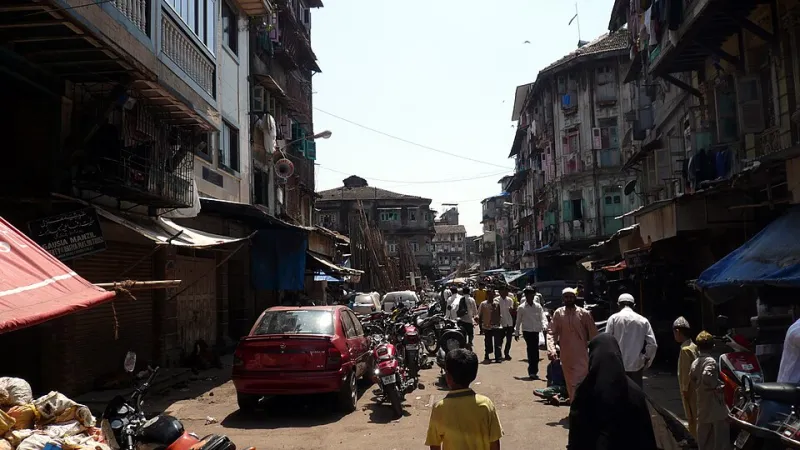
On a sticky morning in late May 2026, the sky over Mumbai looks less like weather than a held breath. The southwest monsoon is still a few weeks away, but the city has already begun its annual edit. Outside a hardware store in Dadar, a man in a faded polo shirt is testing a sheet of blue tarpaulin by snapping it like a bedsheet. Next door, a fruit seller is stacking wooden crates on bricks. A tailor has moved his sewing machine six inches back from the doorway, which sounds minor until you realize that those six inches are the difference between a dry day’s work and a ruined one.
Mumbai does not wait for the rain to announce itself. It prepares in small, stubborn increments. And the result is one of the most interesting pieces of urban design in the city — not drawn by an architect, not approved by a committee, but assembled every year by people who cannot afford to close.
The Five-Minute Forecast
Ask a shopkeeper about monsoon preparation and you will rarely get a grand theory. You will get a list. Raise the counter. Tape the wires. Roll the sarees inward. Put the good shoes on a shelf. Keep a towel near the register. Watch the drain outside, because the drain tells you more than the sky does.
This is shopkeeper logic: practical, local, and ruthlessly efficient. It treats the street as a system with predictable failure points. The corner where water pools. The doorway that catches runoff from a broken downpipe. The stretch of pavement where a hawker’s cart becomes a small dam. None of this is romanticized. It is simply observed, then worked around.
For a visitor, that logic is useful. Mumbai’s monsoon is not just a season to endure; it is a set of cues. If the shops are raising their floors, the rains are close. If the tarps are out but the gutters are still being cleared, you are in the messy in-between. If the pavement outside a stall is dry while the road is flooded, someone has already solved a problem you have not noticed yet.
A Plinth Is a Business Plan
In Fort and lower Parel, the adaptations are subtle. A cafe puts down rubber mats. A bookstore slips a plastic sleeve over its outdoor display. A chemist stacks soap and shampoo on a low wooden platform that looks like a stage for very small theater.
Head north into Dadar, Matunga, or Sion, and the architecture gets more direct. Entire shopfronts grow temporary thresholds: bricks, concrete blocks, overturned crates, metal risers. A vegetable seller might work from a platform that lifts his produce a foot off the ground. A chai stall might add a second awning, angled so that water runs away from the stove rather than onto it.
These raised plinths are not decorative. They are flood insurance at the scale of a single family business. They also change how the street works. A shop that normally spills onto the pavement pulls itself inward. A hawker who usually claims a wide patch of road narrows his footprint. The street becomes less generous but more deliberate. People move in single file. You learn quickly not to stand in the gap between a tarp and a drain.
Plastic as Infrastructure
Mumbai’s monsoon plastic is easy to dismiss as clutter. That is a mistake. Look closer and you see a kind of soft architecture: sheets tied to bamboo poles, transparent panels stapled over shelves, tarpaulins stretched between buildings, shopping bags repurposed as waterproof covers for auto-rickshaw seats.
The plastic is doing real work. It redirects water. It protects stock. It creates a dry pocket where a transaction can happen. It also signals boundaries. When a shopkeeper ties a tarp low across his entrance, he is not inviting you to duck under it. He is telling you where the dry zone ends.
Some of the city’s most elegant monsoon solutions are almost invisible. A grocer in Matunga uses a length of split PVC pipe to send roof runoff into a gutter instead of onto his threshold. A stationery stall in Fort keeps a stack of old newspapers by the door, not for reading but for wrapping purchases before they go back into the rain. A flower seller near Dadar station arranges marigolds in shallow baskets so that water passes through rather than pooling around the stems.
None of this is taught in design school. It is taught by last June, and the June before that.
Drains, Gravity, and the Guy Who Knows
Every neighborhood has a person who understands its drainage. Sometimes it is a shopkeeper. Sometimes it is a sweeper, a watchman, or a hawker who has stood on the same corner for twenty years. They know which drain clogs first, which slope is a lie, and which stretch of pavement turns into a shallow river after forty minutes of heavy rain.
You can learn from them by paying attention. Watch where people step. Watch which side of the street empties first. Watch where a shopkeeper places a brick, because that brick is probably marking a spot where the water rises. In Mumbai, the pedestrian route during a downpour is rarely the shortest one. It is the driest one, and it has been negotiated by thousands of people making tiny decisions.
This is the deeper story of the monsoon street. The city is not simply getting wet. It is constantly recalibrating. Commerce does not stop; it changes shape. A stall becomes a window. A doorway becomes a counter. A pavement becomes a maze. The adjustments are temporary, but they are also a form of knowledge — a living record of what works.
How to Visit Without Getting in the Way
If you are in Mumbai during the rains, dress for the street rather than for the forecast. Quick-dry shoes or sandals with grip are better than soggy sneakers. A compact umbrella is useful; a giant one is a hazard in a crowded lane. Keep your phone and wallet in a plastic pouch, and carry a small towel. Cash in small denominations helps when card machines get finicky in the humidity.
More important, read the room. Do not duck under a shopkeeper’s tarp unless you are invited. Ask before taking photos of makeshift setups; these are people’s workplaces, not installations. If a lane is narrowed by raised plinths and stacked goods, give way. If a shop is half-shuttered, assume the owner is protecting stock and come back later. And if someone warns you away from a particular stretch of pavement, believe them.
The monsoon is not a good time to chase a checklist. It is a good time to watch how a city stays open. The tarps, bricks, and plastic sheets are not pretty, exactly. But they are intelligent. They are Mumbai’s shopkeeper logic made visible — a reminder that urban design is not only what gets built, but what gets improvised, every year, by people who refuse to let a little rain close the shop.