The Call Sheet Says Lunch: Following Film Crews to Their Andheri West Canteens
Photo: Srikanth Ramakrishnan/BESTpedia, CC BY-SA 4.0, via Wikimedia Commons
There is a particular hour in Andheri West when the sidewalks fill with people in black T-shirts and lanyards, walking with the slightly glazed look of someone who has been holding a bounce board since 6 a.m. It is somewhere between 1 and 2:30 in the afternoon, and they are all going to lunch. Follow them. Nobody will ask for your credentials.
Mumbai's film industry is a big, spread-out machine, and the shooting floors themselves are mostly a few miles east in Goregaon. But the offices, casting rooms, editing suites, costume warehouses, and equipment rentals that keep those floors running are stacked here in Andheri West — especially around Aram Nagar, the warren of low-rise lanes near Versova where a lot of the unglamorous work happens. Which means the neighborhood is full of kitchens that exist to feed people who are on the clock and paying for their own meals.
That is your opening. No studio tour, no souvenir mug. Just a plate of dal, rice, and something fried, eaten next to a junior artist who has been in three shots today and will probably be cut out of all of them.
Why the Crews Eat Here, and Why You Should Too
A unit lunch on a big production can be catered, and it can be fine. But most of the people you see on a set — the lightmen, the spot boys, the makeup assistants, the extras — are freelancers working on daily rates. They eat where the food is fast, filling, and cheap enough to leave room in the day's pay. That translates to thalis in the ₹120–200 range (roughly $1.50–2.50), biryani by the plate, and chai that costs less than a pack of gum back home.
The food is not fancy. It is also not the tourist version of Mumbai street food, which tends to run sweet and deep-fried. This is working lunch: rice, roti, dal, a vegetable, maybe chicken if you are splurging, and a pickle that has been in the same ceramic jar since the Bush administration. Sit down, eat, get out. The whole thing takes twenty-five minutes.
Stop One: The Canteen Behind the Casting Offices, Aram Nagar
Start in Aram Nagar 2, the tangle of gullies just north of Versova Metro. Look for the buildings with hand-lettered signs for casting directors and production houses, then look for the doorway with the queue. It will be plain — a blue-painted room, plastic chairs, a framed photo of a deity near the cash box, a fan that does its best.
Order the veg thali. You will get a mound of rice, two or three rotis, dal, a seasonal sabzi, and usually something like a pakora or a spoon of sweet. Eat it with your right hand if you want to blend in; nobody will mind if you use the fork they will offer. The chicken thali, if it is on, is worth the extra hundred rupees — usually a thin, home-style curry rather than the cream-heavy restaurant version.
This is also where you will overhear the best conversations: which casting director never calls back, which shoot went two hours over, who got a line in a web series and is now insufferable about it. Do not insert yourself. Just chew.
Stop Two: The Punjabi Dhaba That Feeds the Vanity Vans
Walk ten minutes south toward the Lokhandwala back lanes, the ones behind the gyms and the salons, and you will find the second stop: a dhaba-style kitchen with a tandoor out front and a TV playing something loud. This is where drivers park the vanity vans and eat while their actors are in hair and makeup.
Order the tandoori roti, the dal makhani, and a plate of paneer tikka if you are hungry. It is heavier than the canteen thali and it is supposed to be. This is a meal for someone who might not eat again until 11 p.m. Skip the fancy lassi and get the salty chaas instead — it is cheaper and it is what the drivers are drinking.
If you are traveling with someone who is nervous about hygiene, this is a good stop to test the waters. The food is cooked hot and fast in front of you, and the turnover is high, which is its own kind of reassurance.
Stop Three: The Parsi Kitchen With the Fixed Menu
Every neighborhood in this part of Mumbai has one: a small Parsi-run kitchen, usually in a converted ground-floor flat, serving the same four or five dishes every day. Andheri West has a couple, and the crews know exactly which one is closest to their shoot.
The menu is predictable in the best way. Dhansak on Sundays, if you are lucky. Otherwise: mutton cutlet, sali boti, a simple chicken curry with rice, and a fridge full of raspberry soda. Prices sit around ₹250–350 for a full plate (about $3–4.25), which is a splurge by crew standards and still less than an airport sandwich.
The decor is aunties' living room, because it mostly is. Do not expect a menu. Do not expect speed. Do expect to be asked whether you want more rice, twice, whether you say yes or not.
Stop Four: Cutting Chai and the Four O'Clock Reset
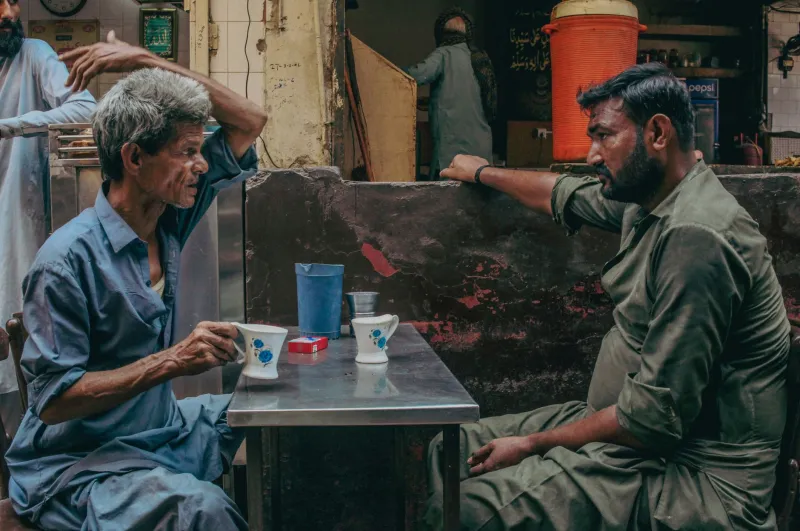
You are not done. Around 4 p.m., the crews who are still working take a chai break, and the tea stalls near the bigger production offices fill up again. Order a cutting — a small glass, half the size of the standard — and stand on the pavement with everyone else. It costs about ₹15. It will be extremely sweet and extremely hot. Drink it anyway.
If there is a stall doing maska bun or a plate of poha, get one. This is the part of the day where nobody is in a hurry, and it is the closest you will get to the actual rhythm of the industry without a call sheet.
The Unwritten Rules
Go on a weekday, between 1 and 2:30 p.m. Weekends are dead, and the food is better when the kitchen is turning tables. Carry small cash — many of these places take UPI, but not all, and a foreign card is useless. Do not photograph people without asking, especially actors in makeup or anyone in a costume. Do not ask "are you famous?" It is a small industry and the answer is always awkward.
And if someone in a black T-shirt tells you the food is better on the bigger films, believe them, but do not ask for an invite. Just finish your thali.
Getting There and Timing
Take the metro to Versova or Andheri West and walk. The whole crawl is under two miles if you do it in order, and it is flat. Budget ₹500–700 (about $6–8.50) for the day if you are eating at all four stops, less if you skip the Parsi kitchen. Start hungry. Wear shoes you can stand in. The crews will be back at work by 2:45, and so, probably, will you.