The Five-Foot Library: A Morning Hunt Through Mumbai's Pavement Bookstalls

Photo: Mumbai pavement bookstalls Fort Churchgate books sidewalk vendor, via i.pinimg.com
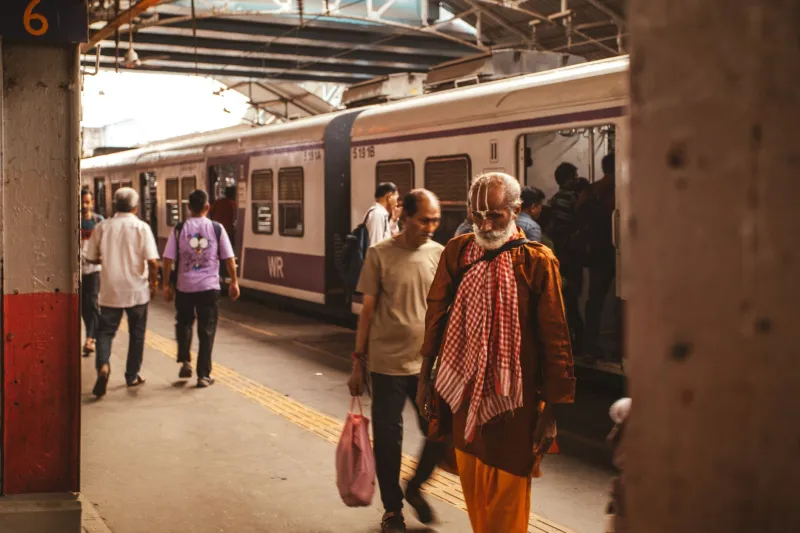
At 8:30 on a weekday, Churchgate is already a machine. Commuters pour out of the station, cab drivers tap their horns for no clear reason, and the first vendors are still unrolling tarps on the pavement. Within twenty minutes, the stretch of Mahatma Gandhi Road near Churchgate Station becomes something else: a five-foot-high library with no card catalog, no closing-time bell, and no obligation to buy anything at all.
This is not a curated bookstore. It is the city's reading subconscious, laid out on cotton sheets and sorted by instinct. You will find a dog-eared John le Carre next to a 1970s issue of National Geographic, a Penguin classic with someone else's name inside, and a coffee-table book about Indian textiles that weighs more than your carry-on. The pleasure is not in finding a specific title. It is in letting the city decide what you will read next.
Start at Churchgate, Before the Rush
Begin outside Churchgate Station on Mahatma Gandhi Road. The stalls here are the most accessible and the most commuter-friendly. Think of it as the sidewalk cousin of a good used-book shop in Brooklyn or Portland: fast, practical, and heavy on popular fiction, thrillers, romance, business books, and old magazines. This is where office workers grab a paperback for the train and where students hunt for exam guides at prices that make Amazon look extravagant.
Walk north toward Flora Fountain. The sidewalk narrows, the shade shifts, and the inventory gets more interesting. Stalls around the Flora Fountain edge of Fort tend to carry art, architecture, history, and the kind of large-format books that look impressive on a coffee table and terrible in a suitcase. You may find remainders of Indian art catalogs, old Bombay photographs, and biographies of people you have never heard of but will now feel obliged to read about.
From there, drift into the lanes around D.N. Road and Horniman Circle. This is where the crawl slows down. The stalls are smaller, the stacks are dustier, and the vendors are more likely to let you browse without hovering. Literature, poetry, Penguin classics, old Booker winners, and the occasional surprising first edition turn up here. Nothing is guaranteed. That is the point.
What Each Stretch Does Best
The Churchgate row is your warm-up. Look for cheap paperbacks, vintage magazines, and travel guides from the 1980s that are now accidental history books. If you want something to read on the flight home, buy it here and do not overthink it.
The Flora Fountain and D.N. Road cluster is better for visual books: art, design, architecture, photography, and Indian history. The stock changes constantly, so ask the vendor what came in this week. They may not have a system, but they remember faces and subjects.
The Horniman Circle side is the treasure-hunt stretch. This is where you kneel on the pavement, pull out a title with a cracked spine, and discover it is exactly the book you did not know you wanted. Vintage magazines, out-of-print fiction, and oddball nonfiction are the draw. If you see something you love, buy it. The next person will not hesitate.
The Unwritten Rules of Bargaining
Mumbai's pavement booksellers are professionals. They have read the tourist before the tourist has read the first page. Bargaining is expected, but it is not a performance of cruelty. It is a conversation with a reasonable ending.
Start by asking the price of one book, not the whole stack. Then ask for a lot price on three or four. Bundling is where the real deals happen. If the vendor quotes 500 rupees for one paperback, that is probably a starting point, not a final offer. Counter with something sensible, smile, and be willing to walk away. Do not insult the book or the seller. Do not haggle for ten minutes over twenty rupees. And once you agree on a price, pay it without another round of negotiation.
Cash is easiest. Many vendors accept UPI, but a foreign card or phone may not work, and small notes keep the transaction simple. Check condition before you pay: missing title pages, water stains, brittle paper, and insect damage are common in older stock. A little wear is part of the charm. A book that falls apart in your hands is not.
Shipping Your Finds Home to the US
This is the practical part that separates a fun browse from a baggage disaster. Paperbacks are your friends. Hardcovers are heavy, and coffee-table books are heavier than they look. Weigh your stack before you commit. Airline carry-on limits are unforgiving, and international shipping from India is not cheap.
For small batches, carry the books in your luggage and declare them if required. For larger hauls, compare India Post with private couriers. India Post is usually cheaper, but speed and tracking vary by service. Ask at the post office about air versus surface options, pack everything in plastic before boxing it, and keep receipts. Check current US customs rules before you ship, since thresholds and procedures can change. If you are buying a genuinely rare book, photograph the title page and copyright page before it leaves your hands.
The Real Souvenir
You can leave Mumbai with a fridge magnet or a painted elephant. Or you can leave with a 1978 paperback that smells like monsoon and a vintage magazine that no one in your hometown will ever find. The pavement bookstalls are not a tourist attraction in the official sense. There is no ticket, no guide, and no gift shop. That is exactly why they matter.
They are a daily ritual for the city: vendors who know their regulars, readers who stop on the way home, and the small democratic pleasure of browsing without being sold to. Spend a morning here and you will understand something about Mumbai that no museum can quite explain. The city is always in a hurry, but it always has time for a book.